
You’ve probably noticed that TVs are getting noticeably larger over the years, and look nothing like the box TVs that were introduced about 100 years ago. More and more people are ditching cable and satellite TV in favor of streaming services, relying heavily on smart features. Mini-LED tech that used to only be a feature in TV sets priced at $2,000+ is now showing up in $600 TVs, OLED has finally come within reach for mainstream buyers, and tariff-driven shifts in manufacturing have shaken up which brands are winning shelf space at Walmart, Best Buy, and Amazon, altering the market substantially.
The result is a 2026 TV market with a handful of models that are selling at noticeably higher rates than the rest — not because they’re the most expensive or most hyped, but because they hit a sweet spot of price, features, and timing. It penetrates the market quickly to attract large amounts of consumers. We dug into current sales rankings, retailer bestseller data, and spec sheets to figure out exactly which TVs are moving fastest and why. Here’s what we found.
A quick note on our approach: this guide is built from research, such as sales data, manufacturer specs, and aggregated buyer and reviewer feedback, rather than in-house hands-on testing. We’ll flag anywhere that distinction matters.
The Big Picture: Why 2026 Is Different
A few forces are shaping what’s selling right now:
Advertised Specs and Marketing Gimmicks
A primary driver of current sales is the rapid “trickle-down” effect of high-end display technologies into the mainstream market. Features that were once exclusive to luxury-tier televisions, such as Mini-LED, OLED, Quantum Dot (QD) color filtering, and advanced local dimming, were now becoming normalized at mainstream and budget-friendly price points. This has redefined the purpose of market competition, where even mid-range models offer performance metrics that rival the top-tier models of just a few years ago. Manufacturers are engaged in a “race to the top” regarding specifications, forcing brands to differentiate not just on picture quality, but on “value-per-nit” and “value-per-dimming-zone,” making premium performance a new baseline for market relevance.
The Consumerization of TV
Televisions have transitioned from being mere hardware appliances to being viewed as lifestyle centerpieces that must integrate into the home environment. This is fueling two opposing but simultaneous trends: screens are either becoming “invisible”—using matte, glare-free finishes and flush-mount designs to blend into home decor—or “monumental,” with 85- to 100-inch displays becoming the new standard for flagship lineups. Consumers are increasingly prioritizing aesthetics and bright-room performance, forcing manufacturers to innovate with anti-reflective layers and immense peak brightness to combat natural light in modern, open-concept living spaces.
Depending on AI to Assist with Shopping
When you search for a product on Amazon, there is most likely an AI element on its interface. Practically all e-commerce platforms include AI shopping assistants, while AI overviews appear within search platforms. These tools now serve as the primary discovery layer, summarizing reviews, forums, and technical data to provide objective comparisons. Additionally, AI tools can be used for different purposes — some can complete purchases automatically, and others simply verify reviews on your behalf. This shift is reducing the “brand premium,” the extra cost paid solely for a name on the bezel, as AI tools point out sets that don’t provide real value for the price.
Gaming Is Now a Core Feature
Many packages that TVs come in now include gaming specs, since that’s something shoppers actively look for. The native refresh rate panels (144Hz and above), Variable Refresh Rate (VRR), and Auto Low Latency Mode (ALLM) are now expected features, even in non-gaming-specific sets. Manufacturers are under pressure to treat living room TVs as “all-in-one” entertainment hubs, capable of handling competitive gaming, movie nights, and day-to-day streaming with equal technical proficiency, allowing viewers to watch an enhanced version of anything they want. This high-performance engineering requirement is pushing hardware manufacturers to ensure flawless motion and responsiveness, regardless of the screen’s primary purpose.
With that context, here’s what’s actually selling.
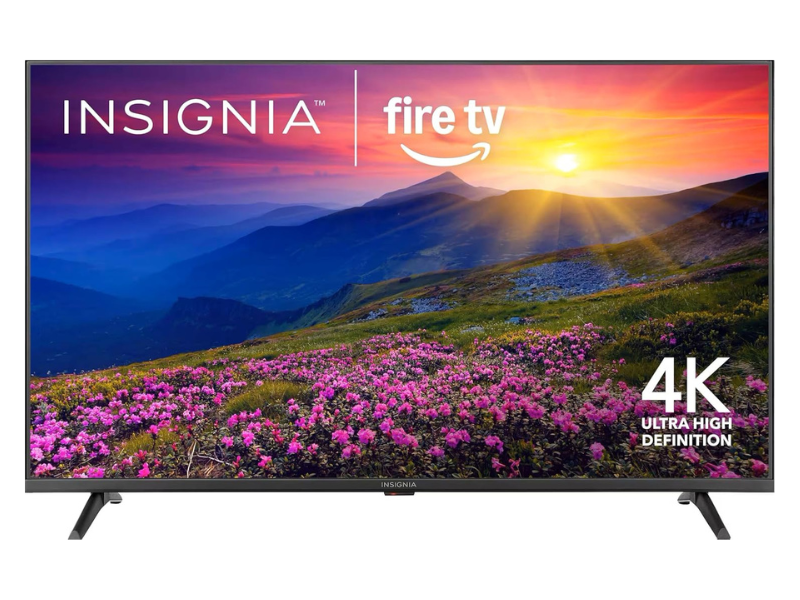
Overall Bestseller: Insignia Fire TV F50 (55″)
This TV serves as the essential budget entry point for large-format 4K viewing. It explicitly prioritizes practical smart features and expansive screen real estate, making it the perfect choice for guest bedrooms, college dorms, or any secondary household space.
Why It’s Selling: It holds an absolute rock-bottom price position that consistently undercuts comparable entry-level displays, offering buyers a surprisingly vibrant, smart-enabled screen package for well under $180.
Key Specs:
Panel Type & Picture Quality: This TV features a Direct-Lit LED panel where one uniform LED backlight layer lights the whole screen evenly, and presents bright, vibrant colors and shades, providing a panoramic view. That means steady, consistent brightness in any lighting, but it can’t produce the deep, localized blacks you’d get from Mini-LED or OLED.
Refresh Rate: This TV uses a 60Hz standard refresh rate, smooth enough for movies, TV, creating a seamless transition. It doesn’t support variable refresh rate (VRR), or Auto Low Latency Mode (ALLM), so fast-paced or competitive gaming won’t look as fluid as on a 120Hz+ set.
Screen Size & Design: The TV has a screen size of 55″ and a thickness of 2.8″. It’s typically watched at a 6-8 feet viewing distance.
Available sizes: 43″, 50″, 55″, 65″, 70″, 75″, 85″
Smart Platform & Power: Fire TV built in, with direct access to Netflix, Prime Video, and Disney+, plus a dashboard view for smart home devices like a front-door camera feed. The included Alexa Voice Remote adds hands-free app switching, search, and input changes.
Resolution & HDR: 4K Ultra HD and HDR10, the baseline HDR format. Peak brightness is measured at around 300 nits, suitable for indoor environments with not too much lighting. Dolby Vision adapts brightness settings throughout each scene, although it stays limited by the low brightness.
Audio & Ports: DTS Virtual:X simulates a surround-sound effect from the built-in speakers to create a wider bubble of sound. The port selection contains of three full-bandwidth HDMI 2.0 ports. An HDMI eARC port is included on HDMI port 1 if you want to pass uncompressed audio to a soundbar later.
Who It’s For: This display is built for budget-conscious shoppers who want a versatile screen size on a tight budget. It’s the perfect low-risk addition for casual viewing in guest bedrooms, college dorms, or playrooms.
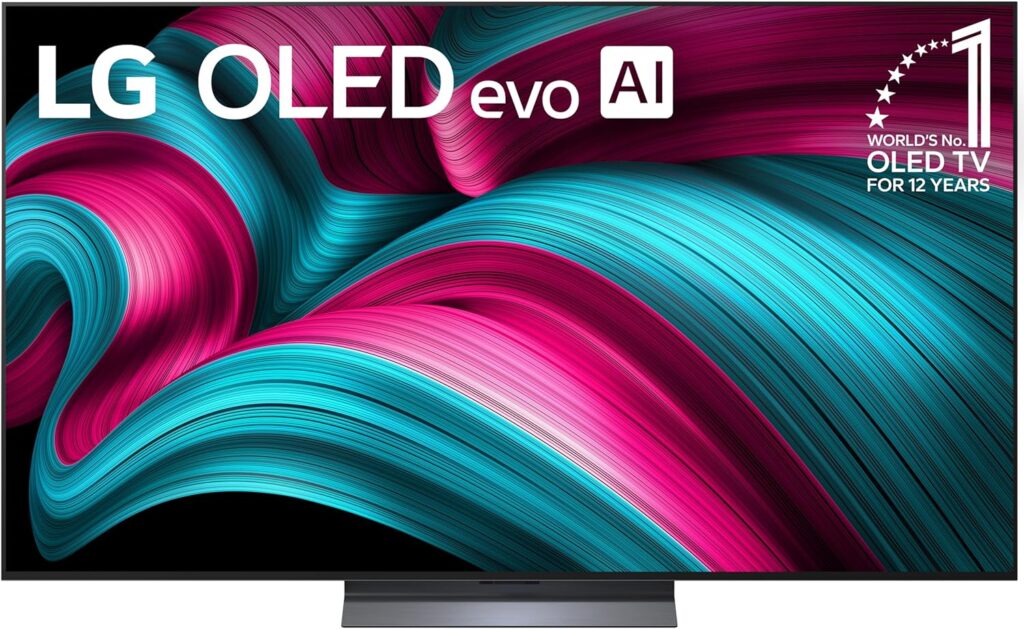
Best OLED: LG C5 OLED evo (65″)
This display acts as the industry benchmark for visual fidelity, utilizing self-lit pixel technology to achieve perfect blacks and infinite contrast. It’s flawlessly engineered for those who prioritize cinema-accurate color science and ultra-fluid motion handling for both cinematic film viewing and high-end gaming.
Why It’s Selling: It remains the most universally recommended OLED TV across independent review aggregators, establishing a consistent track record for the elite performance standards required by modern home cinema enthusiasts.
Key specs:
Panel Type & Picture Quality: This TV uses a self-lit OLED evo panel, meaning each pixel lights up and shuts off for true blacks and avoids the “blooming” halos that backlit panels show around bright objects. Filmmaker Mode locks playback to the director’s intended picture settings, removing awkward and unnecessary TV features for movies.
Refresh Rate: You’re getting a native 120Hz panel with near-instant OLED pixel response time. Motion stays sharp and stable during fast scenes, and it supports VRR for smoother console and PC gaming.
Screen Size & Design: It has a screen size of 65″ and a thickness of 1.8″. It’s typically watched at a 7-9 feet viewing distance.
Available sizes: 42″, 48″, 55″, 65″, 77″, 83″
Smart Platform & Power: LG’s WebOS, with its own streaming library, paired with LG’s Magic Remote, with an Alexa voice assistant feature, and a point-and-clicker circle to press without the use of buttons.
Resolution & HDR: The TV displays 4K UHD resolution with HDR10 support. Its tested peak brightness is measured at around 1,200 nits, making it a great option for spaces that have normal lighting. Dolby Vision adjusts brightness, by adapting to every scene’s colors, light, and objects rather than applying just one setting for the whole video, a step up from baseline HDR10. AI-powered 4K Super Upscaling sharpens lower-resolution sources to better fill the 4K screen.
Audio & Ports: Its ɑ9 AI Sound Pro technology delivers object-based surround sound through its built-in 2.2 sound system, enabling the Dolby Atmos experience. “Wow Orchestra” syncs the TV’s speakers with a compatible LG soundbar so the TV can balance high-pitch and low-pitch between the two for a more unified soundstage. For connectivity, it includes four full-bandwidth HDMI 2.1 ports alongside three USB ports, with eARC support built into HDMI 2.
Who It’s For: This TV is engineered for home theater purists and enthusiasts who demand absolute color accuracy and pitch-black movie performance. It’s a premium choice for movie buffs and high-end console gamers.
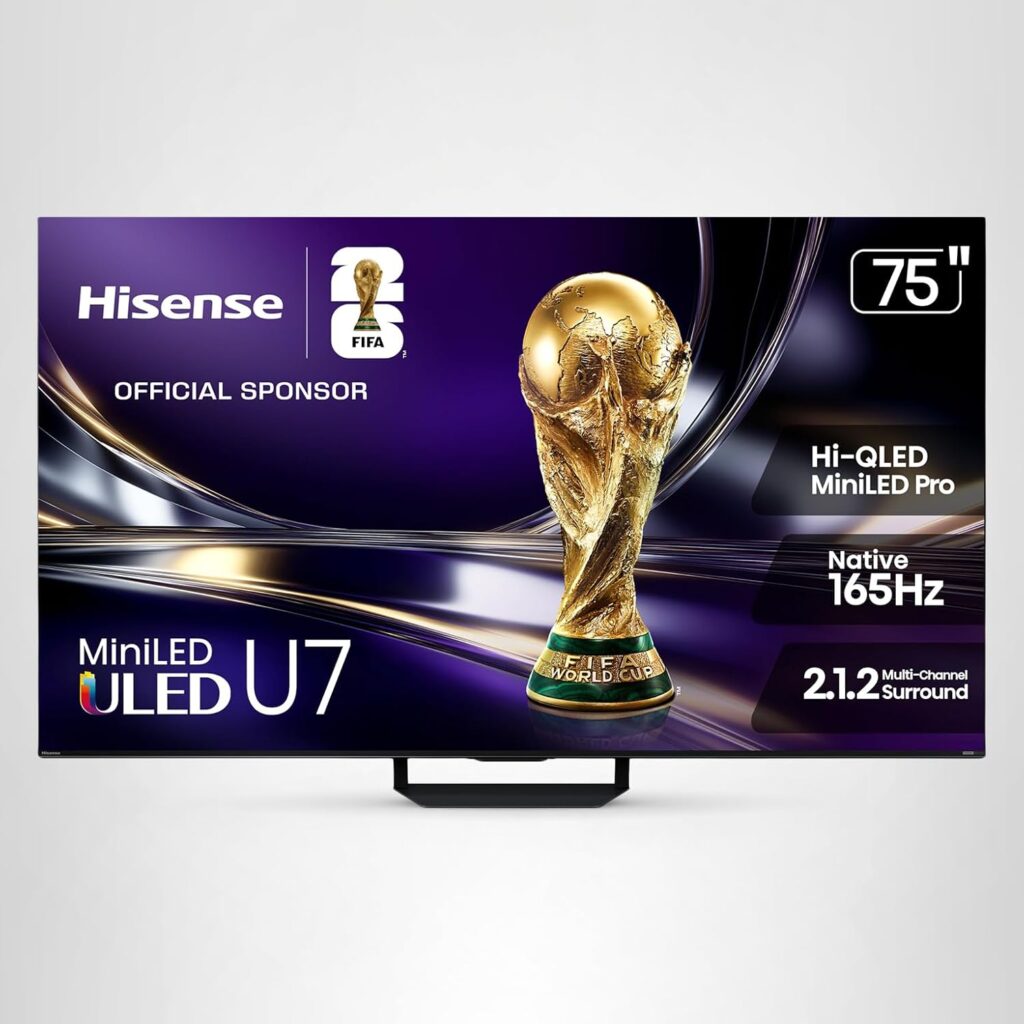
Best for Gaming: Hisense U7SG (75″)
This model seamlessly bridges the gap between massive, cinema-sized displays and high-performance gaming hardware. It’s built as a versatile, all-in-one centerpiece for households requiring a single, high-traffic screen capable of handling diverse entertainment and daytime streaming needs.
Why It’s Selling: It captures the market by delivering premium 165Hz enthusiast gaming features and highly precise local dimming at a mid-tier price point, offering a giant screen without name-brand premiums.
Key Specs:
Panel Type & Picture Quality: A vast amount of dimmed LED lights sit behind the screen’s Mini-LED ULED panel, also known as Hi-QLED by Hisense. producing true blacks and vibrant highlights than a single fixed backlight, while quantum dot color filtering improves color saturation beyond standard LED. It includes an anti-reflection layer which keeps the picture crystal clear without any disruption from bright lights coming from anywhere.
Refresh Rate: This TV uses an impressive 165Hz refresh rate. For high-performance gaming, ALLM turns on Game Booster mode, where VRR can support a refresh rate of 330Hz, which is above the needed rate for movie streaming and playback.
Screen Size & Design: Its screen size is 75″ and thickness is 2.3″ inches. It’s typically watched at a 9-11 feet viewing distance.
Available sizes: 55″, 65″, 75″, 85″, 100″
Smart Platform & Power: The TV uses the Google TV smart platform, allowing you to access its software along with Chromecast built-in for casting from a phone or laptop.
Resolution & HDR: It features a 4K UHD resolution. The tested peak brightness is measured at around 2,000 nits, great for bright living rooms. HDR10+, Dolby Vision’s equivalent, adjusts brightness throughout each scene, and Dolby Vision IQ improves lighting by adjusting settings according to the ambient room conditions. IMAX Enhanced allows the TV to process the 1.90:1 ratio across the TV.
Audio & Ports: The U7SG supports a 2.1.2-channel speaker system using Dolby Atmos to create an object-based surround sound ambience coming from its up-firing speakers. This hardware works seamlessly with Hi-Concerto to easily pair with a compatible Hisense soundbar. The port selection includes four HDMI inputs, all of which are HDMI 2.1. It has eARC support on HDMI 3 for seamless audio pass-through.
Who It’s For: This premium mid-range display targets luxury buyers who want an elite, cinema-grade experience in sun-drenched rooms. It’s the ultimate choice for cinephiles who refuse to compromise on blinding peak brightness.
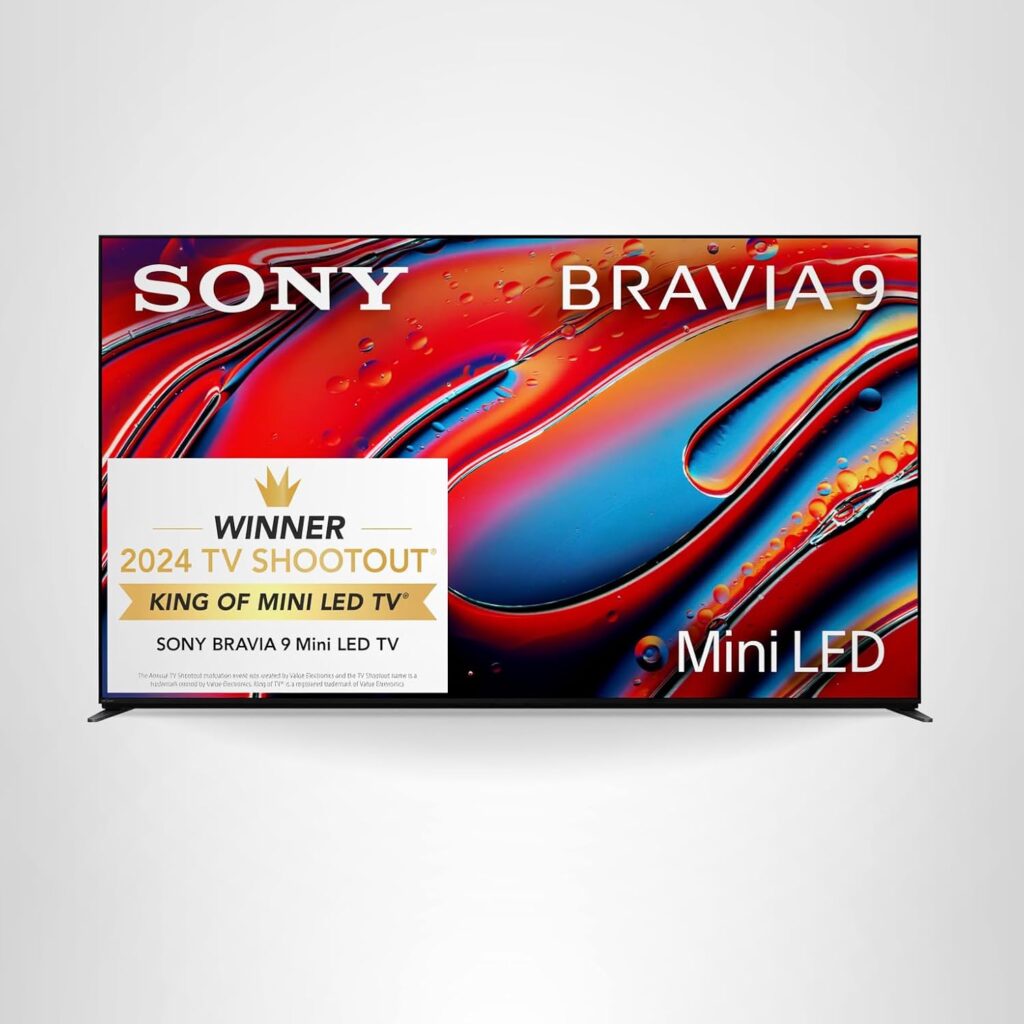
Best Mini-LED: Sony BRAVIA 9 (65″)
The Bravia 9 is a masterclass in Mini-LED performance, explicitly engineered for peak brightness and cinematic accuracy. As the crowned “King of MiniLED TV” at the Value Electronics Shootout, it offers unmatched bright-room performance and premium processing without forcing an upgrade to OLED.
Why It’s Selling: It dominates the luxury theater market because its advanced backlight system achieves near-OLED inkiness while pushing sun-defying peak brightness levels that standard OLEDs cannot replicate.
Key Specs:
Panel Type & Picture Quality: The TV’s high-end Mini-LED QLED panel is powered by Sony’s advanced XR Backlight Master Drive local dimming. This powerful system enables the display to produce exceptionally deep black levels and intense peak brightness, providing a high-contrast HDR experience that maintains remarkable image fidelity. Its precise light control ensures that bright highlights remain vivid without sacrificing the shadow detail essential for immersive, cinematic viewing.
Refresh Rate: The TV features a native 120Hz panel, perfect for ultra-smooth transitions for gaming or watching TV and fast-action movies. It supports VRR and ALLM, and delivers flawless 4K/120hz performance for high-quality gaming.
Screen Size & Design: The screen size is 65″ and its thickness is 1.9″. It’s typically watched at a 7-9 feet viewing distance.
Available sizes: 65″, 75″, 85″
Smart Platform & Power: Google TV smart platform integrated into Sony’s Cognitive Processor XR, the TV’s brain, which optimizes every frame and sound, adjusting its settings.
Resolution & HDR: The TV delivers a 4K UHD resolution. Its tested peak brightness is at around 2,800 nits, among the brightest Mini-LED TVs tested, which improves daytime watching. Brightness stays unaffected by ambient lighting. HDR format supports HDR10, HLG, and Dolby Vision. Prime Video Calibrated mode does not rely on standard settings, but instead adapts to each scene. IMAX Enhanced creates a cinema-like experience, filling the screen with a 1.90:1 aspect ratio.
Audio & Ports: Its Acoustic Multi Audio+ technology delivers surround sound through its 2.2.2 sound system, syncing audio and video for more spatial accuracy. Connectivity consists of four HDMI inputs: two full-bandwidth HDMI 2.1 ports and two standard HDMI 2.0 ports. HDMI eARC is featured on HDMI port 3.
Who It’s For: This one is ideal for home theater fans who don’t want to waste time dealing with settings. If you want a TV with pure color precision, where deep blacks are produced and bright colors, this is the one. It’s a serious upgrade for people who really care about how their movies look.
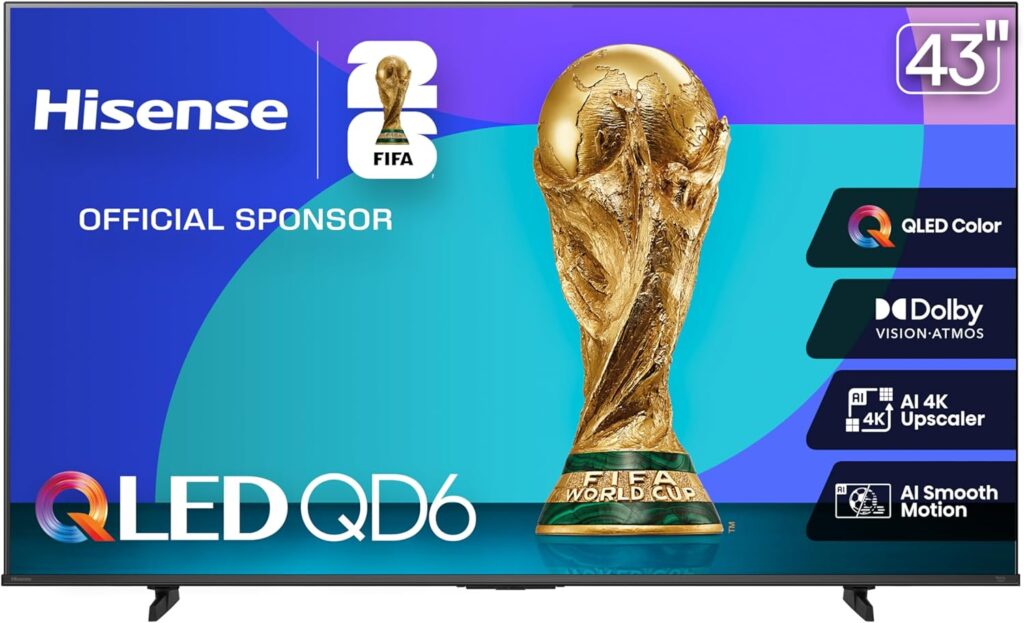
Best Budget Pick: Hisense QD6 (43″)
This TV is a standout option for buyers on a strict budget. While its low price suggests entry-level hardware, the integrated Quantum Dot panel provides deep, rich color depth usually locked behind expensive premium displays, making it an ideal, fluff-free fit for smaller rooms.
Why It’s Selling: It shatters ultra-budget expectations by bringing genuine Quantum Dot color technology to a price tier that typically only offers poor-performing, washed-out screens.
Key Specs:
Panel Type & Picture Quality: This TV features a QLED panel with a standard direct LED backlight, and no local dimming. It also has built-in AI 4K Upscaling and AI Smooth Motion. Dolby Vision HDR optimizes contrast and detail, and Filmmaker Mode removes and extra TV image processing so that movies can be watched with the director’s settings.
Refresh Rate: This one runs at a 60Hz refresh rate. Hisense’s Game mode works with VRR and ALLM in order to bring a fast responding performance to your screen, although its refresh rate isn’t high.
Screen Size & Design: Its screen size is 43″, and its thickness is 2.9″. It’s typically watched at a 4-6 feet viewing distance.
Available sizes: 43″, 50″, 55″
Smart Platform & Power: It has a built-in Fire TV platform with Alexa Voice Assistant available on the remote for search, switching apps, and other commands.
Resolution & HDR: It displays a 4K UHD resolution, and supports the full range of major HDR formats: HDR10, HDR10+, and HLG. The tested peak brightness is at around 300 nits, appropriate for rooms with very low lighting. It also includes a 4K AI Upscaler to improve lower-resolution content like older shows or cable broadcasts.
Audio & Ports: DTS Virtual:X technology processes object-based surround sound through its built-in 2.0-channel system, enabling the Dolby Atmos experience. The TV’s port selection features three HDMI 2.0 ports, including one with HDMI eARC support on HDMI 3.
Who it’s for: Budget-focused buyers who want a large screen and QLED color without the high-end price tag. It is the perfect choice for casual movie watching and gaming in bedrooms or secondary spaces.
Honorable Mentions
Samsung S90F OLED (65″)
The S90F is a performance-focused QD-OLED engineered for cinematic precision and fluid, high-contrast motion. Built primarily for light-controlled rooms, it provides a highly refined display experience that expertly balances absolute ink-black levels with exceptionally vivid, punchy color output.
Why It’s Selling: It delivers cutting-edge QD-OLED performance at an aggressive price point that undercuts rivals, pulling premium buyers away from standard OLEDs with superior peak brightness and pure color volume.
Key Specs:
Panel Type & Picture Quality: This TV showcases a self-illuminating QD-OLED panel with wide viewing angles and self-lit pixel contrast, allowing for light and dark tones. Powered by the NQ4 AI Gen3 processor, handles 4K AI upscaling Pro, and employ a motion enhancer to picture quality instantly. The panel also uses Anti-Reflection technology to reduce glare by scattering light.
Refresh Rate: It has a maximum native refresh rate of 144Hz with Motion Xcelerator support. VRR and ALLM are supported, along with Freesync Premium Pro to completely eliminate stuttering and screen tearing during high-frame-rate gaming.
Screen Size & Design: Its screen size is 65″, and its thickness is 1.8″. It’s typically watched at a 7-9 viewing distance.
Available sizes: 65″, 77″
Smart Platform & Power: The Tizen Smart TV platform runs the S90F, providing immersive smart home integration with a built-in SmartThings Hub and Alexa or Bixby voice assistant, and allows users to connect to Google devices.
Resolution & HDR: It features a 4K Ultra HD resolution with OLED HDR+ and Auto HDR Remastering, which deepen shadow details and vibrant highlights. The tested peak brightness is measured at about 1,500 nits. It also supports IMAX Enhanced for flawless quality, positioning it as a strong alternative to the LG C5 within the Samsung ecosystem.
Audio & Ports: The S90F Object Tracking Sound (OTS) Lite technology powers object-based surround sound through its built-in 2.1-channel speaker system, producing the Dolby Atmos experience. The connectivity incorporates four HDMI ports, all of which are HDMI 2.1 ports. It has an HDMI eARC port located on HDMI port 3.
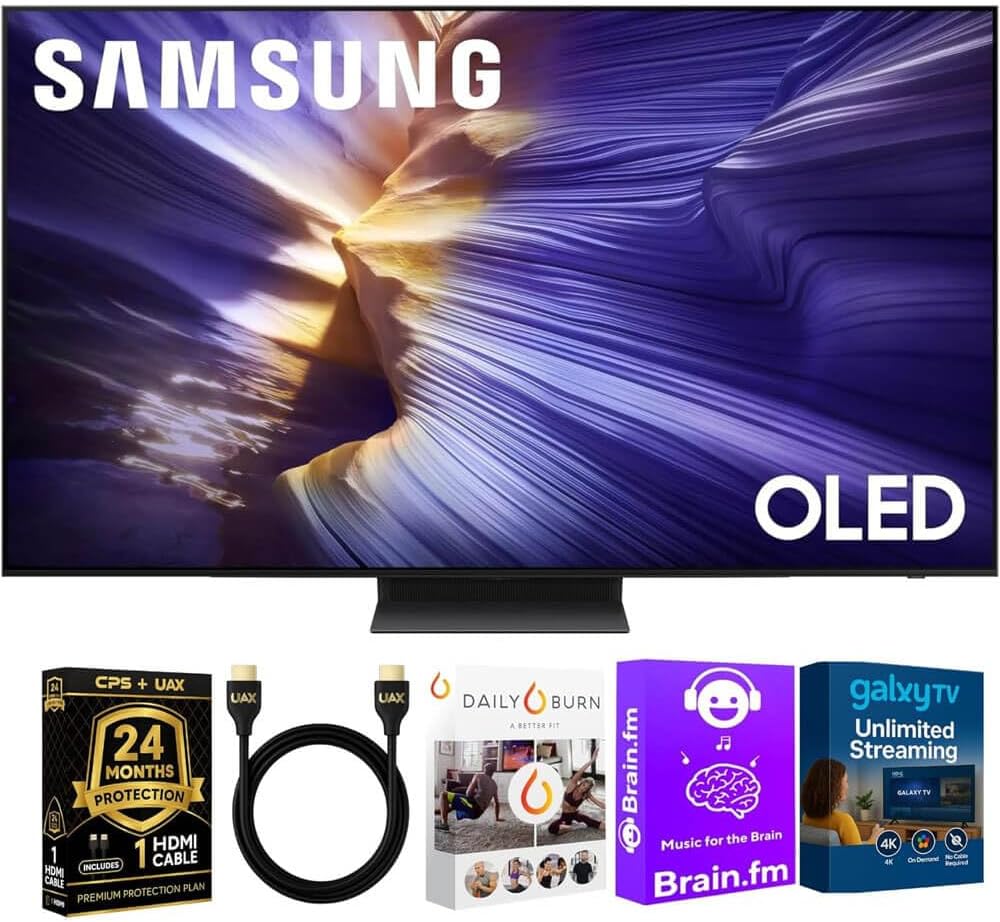
Who It’s For: This model is ideal for competitive gamers and live sports fans who want ultra-fluid motion handling and exceptional daytime brightness. It is perfect for those who want flagship-level color pop without paying premium theater prices.
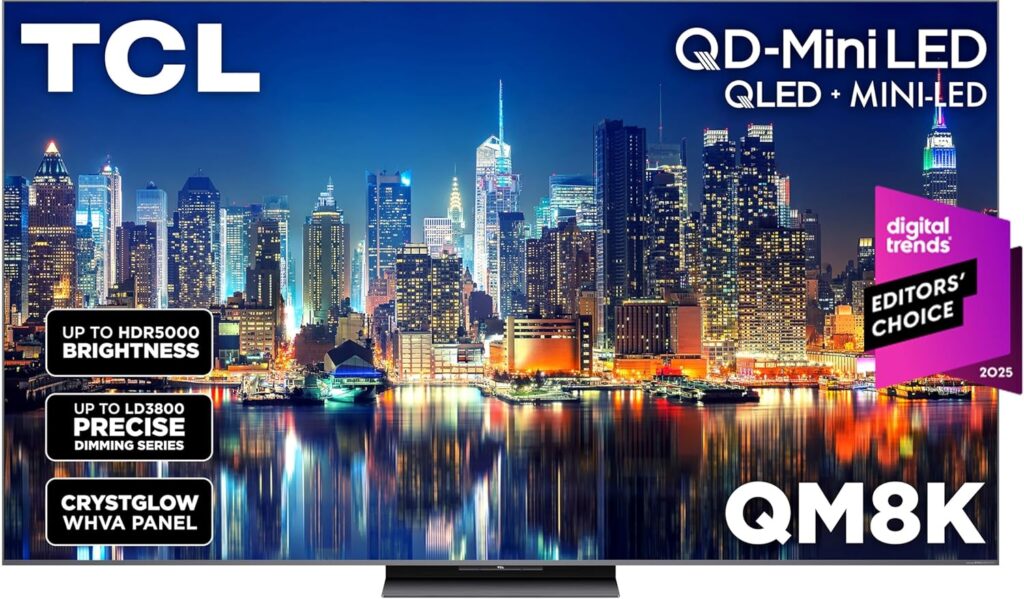
TCL QM8K Mini-LED (75″)
This home theater centerpiece focuses on delivering maximum cinematic scale, acting as a true powerhouse for bright entertainment spaces and high-performance gaming rigs. Designed around a highly premium anti-glare screen layer, it effortlessly maintains its color depth and stability during daytime viewing without requiring complex adjustments or dark window shades.
Why It’s Selling: It disrupts the premium television market by challenging traditional TVs with an industry-leading brightness ceiling and custom spatial audio system at a highly competitive price. This allows enthusiast home buyers and next-gen console gamers to secure absolute top-tier performance without paying typical brand premiums.
Key Specs:
Panel Type & Picture Quality: This TV features a high-end QD-Mini LED backlight that enables the TV to produce deep contrast and bright lights. The TV is driven by the intelligent AiPQ PRO Processor operating up to 3,800 precise local dimming zones. It also has a specialized anti-reflective CrystGlow WHVA panel to avoid glare and bright lights from hitting the screen.
Refresh Rate: It supports a 144Hz native refresh rate coupled with Motion Rate 480 for flawless clarity during fast-paced action scenes. The TV is also equipped with ALLM and Game Accelerator 288, TCL’s extreme gaming mode, for ultra-responsive 288Hz VRR gameplay alongside AMD FreeSync Premium Pro to eradicate screen tearing.
Screen Size & Design: The TV has a screen size of 75″, and a thickness of 2.0″. It’s typically watched at a 7-9 feet viewing distance.
Available sizes: 65″, 75″, 85″, 98″
Smart Platform: It operates on the intuitive Google TV platform for recommended personalized content and thousands of streaming apps. The set includes a backlit premium voice remote featuring built-in Google Assistant and voice control functionality without the use of hands.
Resolution & HDR: The TV delivers a 4K Ultra HD resolution enhanced by HDR ULTRA, Dolby Vision IQ, HDR10+, and HLG. Its tested peak brightness is measures at a massive 5,000 nits of peak brightness in laboratory conditions, topping the list as the brightest performing TV. Fully certified with IMAX Enhanced and Filmmaker Mode to reproduce a theatrical presentation right in the living room.
Audio & Ports: The unit is equipped with a Bang & Olufsen-engineered 2.2.2 speaker system providing a premium spatial soundstage, utilizing dedicated drivers and optimized audio processing for Dolby Atmos and DTS:X. Port selection includes four HDMI inputs: two full-bandwidth 2.1 HDMI ports and a dedicated eARC port on HDMI 3.
Who It’s For: This giant screen is made for dedicated sports fans and gamers who watch content in bright, high-traffic living rooms. It offers an incredible theater-sized impact without the staggering name-brand price tag.
Samsung The Frame Pro (55″)
This TV bridges the gap between high-end gallery aesthetics and true home-cinema performance. It is uniquely engineered for design-conscious buyers who refuse to compromise between a sleek, flush-mounted art-focused aesthetic and the vibrant, high-contrast picture quality of a modern premium flagship.
Why It’s Selling: It corners the lifestyle market by pairing a completely glare-free matte finish with a bright Neo QLED panel, letting users display stunning art when idle without sacrificing movie-night pop.
Key Specs:
Panel Type & Picture Quality: This model leverages Neo QLED (Mini-LED) 4K panel featuring the NQ4 AI Gen3 Processor. It includes Pantone Validated ArtfulColor for professional-grade color accuracy and Auto HDR Remastering Pro to elevate content dynamically.
Refresh Rate: 144Hz native refresh rate with support for 240Hz DLG (Dual Line Gate) performance, making it highly capable for both console and PC gaming. VRR and ALLM are supported, making the gaming experience a high-performing one.
Screen Size & Design: This TV has a screen size of 55″, and a thickness of 1″. It’s typically watched at a 6-8 viewing distance.
Available sizes: 55″, 65″, 75″, 85″
Smart Platform & Power: The TV is run by the Tizen Smart TV platform with Samsung Vision AI Companion, Art Mode, and the Art Store. It includes integrated motion and brightness sensors to optimize the display based on room presence and ambient light.
Resolution & HDR: 4K Ultra HD resolution with support for HDR10+ Adaptive and Gaming.
Audio & Ports: The audio system is a 2.0.2-channel-speaker system setup with Object Tracking Sound (OTS) and Dolby Atmos compatibility. Connectivity houses five full-bandwidth HDMI 2.1 ports, including one Micro Port on HDMI 5, all supporting 4K 144Hz, with dedicated eARC support on HDMI 3 for soundbar integration.
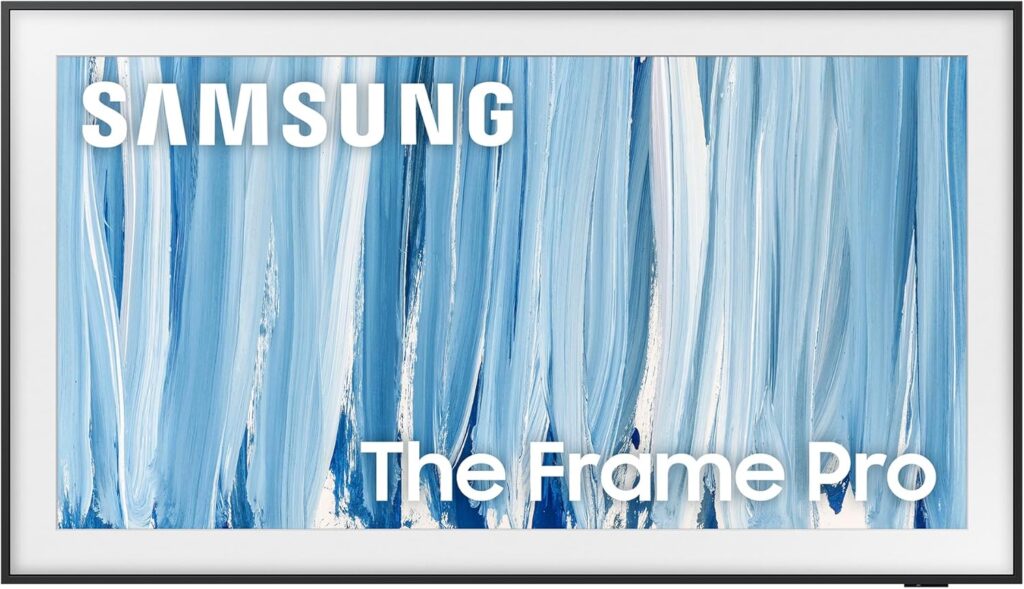
Who It’s For: This lifestyle display is exclusively designed for design-conscious homeowners who can’t really stand the brightness of traditional TVs. It is perfect for anyone wanting a flush-mounted art piece that still handles movie nights.
Quick Buying Guide: OLED vs. Mini-LED vs. QLED
You see these terms everywhere, but you might not know what they mean:
OLED: Each pixel produces its own light, creating vibrant colors and perfect deep blacks, with no backlight “blooming.” The best picture quality is in dark rooms, but it can be less bright than Mini-LED in sunlit spaces. It’s typically more energy efficient than other display technologies, making LG TVs the best option for users who like keeping the TV on for long periods of time, especially those who love watching movies.
Mini-LED: This is a backlighting technology where thousands of tiny LEDs sit behind the screen and grouped into dimming zones for better contrast than older LED TVs, without OLED’s per-pixel precision. The screen gets very bright, so it’s an excellent option for viewers who have a bright living room and want a great experience with no light disturbance.
QLED: This technology takes an extra step in filtering light and color. It’s placed on a film that sits right in between the backlight and screen, enhancing the picture quality by a mile. TVs with this feature are arguably the best types for buyers who have bright rooms. They are also highly resistant to burn in.
| Model | Size | Panel Type | Refresh Rate | Gaming Features | HDMI & Ports | eARC Support |
|---|---|---|---|---|---|---|
| Insignia Fire TV F50 | 55″ | LED | 60Hz | Game Mode (Low Latency) | 3x HDMI 2.0 | Yes (HDMI 1) |
| LG C5 OLED evo | 65″ | OLED | 144Hz | VRR, ALLM, G-Sync, Freesync Premium | 4x HDMI 2.1 | Yes (HDMI 2) |
| Hisense U7SG | 75″ | Mini-LED | 165Hz | VRR, ALLM, Freesync Premium Pro | 4x HDMI 2.1 | Yes (HDMI 3) |
| Sony BRAVIA 9 | 65″ | Mini-LED | 120Hz | VRR, ALLM, Freesync Premium Pro | 2x HDMI 2.0 2x HDMI 2.1 | Yes (HDMI 3) |
| Hisense QD6 | 43″ | QLED | 60Hz | VRR, ALLM | 3x HDMI 2.0 | Yes (HDMI 3) |
| Samsung S90F OLED | 65″ | OLED | 144Hz | VRR, ALLM, G-Sync, Freesync Premium Pro, Motion Xcelerator | 4x HDMI 2.1 | Yes (HDMI 3) |
| TCL QM8K Mini-LED | 75″ | Mini-LED | 144Hz | VRR, ALLM, Freesync Premium Pro, Game Accelerator 288 | 4x HDMI 2.1 | Yes (HDMI 3) |
| Samsung The Frame Pro | 55″ | Neo QLED | 144Hz | VRR, ALLM, G-Sync, Freesync Premium Pro, Motion Xcelerator | 5x HDMI 2.1 | Yes (HDMI 3) |
This post is based on research into current sales data, manufacturer specifications, and aggregated buyer feedback rather than hands-on testing of every model. As an Amazon Associate, we earn from qualifying purchases.